Why the final night should be more than a box-ticking dinner – and how Agent 86 turned a Byron Bay summit finale into a private mini festival.
By Agent 86 Experiences
You know the room before you have even entered it. Round tables. Chair covers. A stage at one end. Few windows, less fresh air, and a program that asks delegates to sit through one more formal meal after several days of conference.
There is nothing inherently wrong with a hotel ballroom or a gala dinner. Both can be exceptional when they suit the audience and the objective. The problem begins when the final night is included because every conference is expected to have one, rather than because someone has decided what that moment should achieve.
That is how an expensive culmination becomes a box-ticking exercise. Guests attend, the awards are presented, the lights come up, and the details begin to merge with every other conference dinner they have experienced.
| If delegates cannot remember which gala belonged to which conference, the event has not earned the memory it was designed to create. |
The final night is the final chapter
A gala often carries more weight than its place in the running order suggests. It is the emotional conclusion to the conference, summit or strategy event. It is where the formal agenda gives way to conversation, recognition and shared experience. It is also one of the last opportunities to shape how people remember the entire program.
Treat that night as a standard dinner, and it may deliver hospitality. Design it as the final chapter, and it can reinforce the purpose of the event, strengthen relationships, and give guests a story they continue to tell.
That continued conversation matters. Event return does not end when the last supplier leaves site. When guests recall the experience months or years later, share it with colleagues or use it as the benchmark for what an event can be, the investment is still working.
Start with the audience, not the ballroom
The first question should not be, ‘What theme should we use?’ It should be, ‘What would feel genuinely special to these people, in this place, after this program?’
The answer may still be a beautifully produced ballroom dinner. It may be an intimate evening in an unexpected venue. It may be a progressive dining experience, a cultural encounter, or something that does not resemble a conventional gala at all.
The important part is that the format follows the audience and the purpose. A memorable event is not necessarily the loudest or most expensive one. It is the one that feels considered: the right level of energy, the right amount of freedom, the right moments of surprise and a clear connection to where guests are.
A smarter conversation about hotel minimum spend
Hotels understandably want conference groups to use their venues, catering and facilities. Minimum daily spends can make an onsite gala appear like the obvious financial decision. But ‘obvious’ and ‘best’ are not always the same thing.
A strong event partner should look at the full program rather than treating the gala in isolation. With early, careful negotiation, food-and-beverage commitments may be allocated across conference catering, breakouts, hosted meetings and other onsite moments. That can help the overall event reach its contracted spend while creating room to consider whether the finale should happen somewhere else.
This is not about dismissing the hotel or adding cost for the sake of novelty. It is about understanding the agreement, protecting the budget and putting the money where it will create the greatest value. Sometimes staying onsite is exactly right. Sometimes moving offsite unlocks the experience the event actually needs.
Beyond the brief: a Mini Festival in Byron Bay
For the finale of a summit in Byron Bay, Agent 86 took the second path.
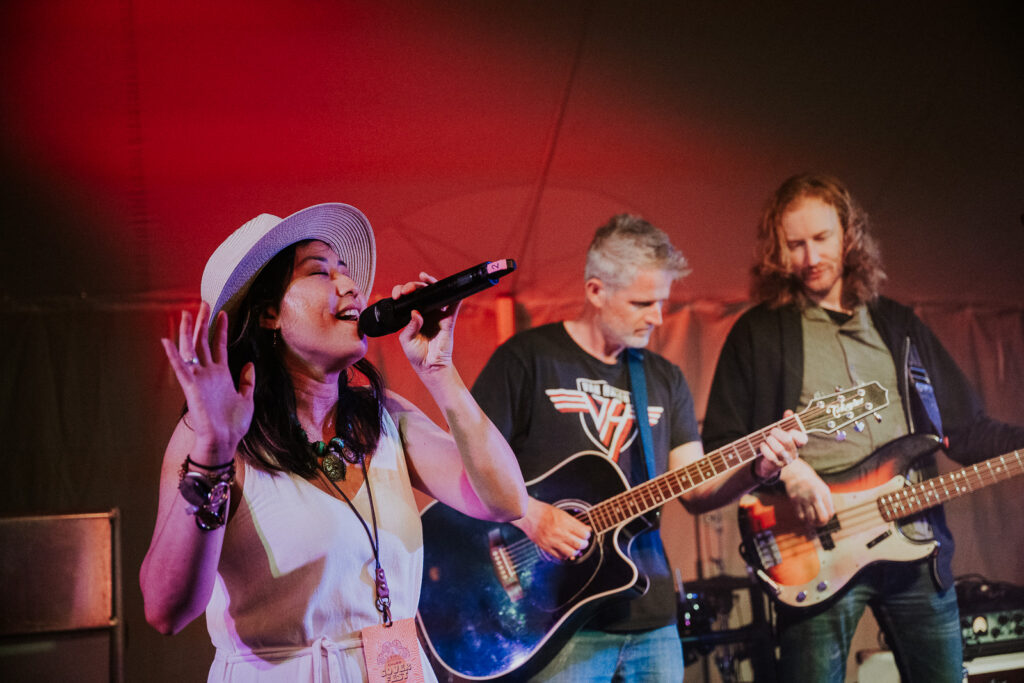
Rather than deliver another formal dinner, we secured a private hinterland property and created a bespoke festival-style experience inspired by the spirit of the region. The concept was built specifically for the audience and respectful of place: open, relaxed, generous and unmistakably Byron Bay.
Over four days, an empty field became a complete event environment. Live music replaced the conventional stage show. Roaming food encouraged guests to explore rather than remain fixed to a table. Open fires created natural gathering points. Distinctive bars and festival-style activations gave people choice, movement, and moments of discovery throughout the evening.
The result was not a themed gala dressed to look like a festival. It was a genuine mini festival designed to function as the summit’s final experience.
| The best creative idea is not the one that looks most different on paper. It is the one that feels completely right when the audience steps into it. |
Why the concept worked
It changed the rhythm. After the structure of a summit, guests were given space to move, choose, and connect on their own terms.
It belonged to the destination. The experience did not fight the character of Byron Bay or import a generic theme. It drew from the hinterland setting, the outdoor environment and the region’s festival spirit.
It created many memorable moments rather than relying on one reveal. Music, food, fire, conversation and exploration worked together, allowing different guests to enjoy the evening in different ways.
And it respected the commercial reality. Creativity was not separated from logistics or budget. The concept had to be buildable, safe, hospitable, and appropriate for the group. That combination – imagination supported by serious delivery capability – is what turns an ambitious idea into a successful event.
Memorability is a form of return
Not every event outcome can be reduced to a single number, but that does not make it commercially irrelevant.
A final night can strengthen the sense of reward after an incentive, reinforce belonging after an internal conference, deepen relationships after a client summit, or create the shared story that carries a strategic event beyond the room.
The useful question is not simply whether guests enjoyed themselves. It is whether the experience helped the event do its job – and whether people still remember, discuss, and associate that feeling with the organisation that brought them together.
That is true event return: not just a successful evening, but an experience with a life after the event.
The Mini Festival, reimagined for your audience
Agent 86’s Mini Festival can be created for other organisations, but it is not an off-the-shelf theme dropped into a new location.
The format is adaptable: the setting, scale, food, entertainment, activations, guest journey and level of production can all be shaped around the audience, destination and objective. What remains consistent is the intent – to replace the predictable gala with a distinctive, professionally delivered experience that people genuinely want to be part of.
It can conclude a conference, summit, incentive or strategy event. It can feel premium, relaxed, celebratory or highly branded. Most importantly, it can give the final night a clear job and the overall event a finish worthy of the investment.
Before you book another gala dinner
Ask what guests should remember when the conference name badges have been packed away.
If the answer could belong to any event, in any year, it may be time to look beyond the ballroom. The objective is not to be different for the sake of it. It is to create a finale that belongs to the audience, the place, and the reason everyone gathered – then deliver it with enough care that it becomes part of the event’s lasting value.
Agent 86 combines strategy, creative design, negotiation and end-to-end delivery to turn important event moments into experiences people keep talking about.
Planning a gala that deserves to be remembered? Talk to Agent 86 about creating a Mini Festival – or an entirely new finale designed around your audience and objectives.